Egocentric
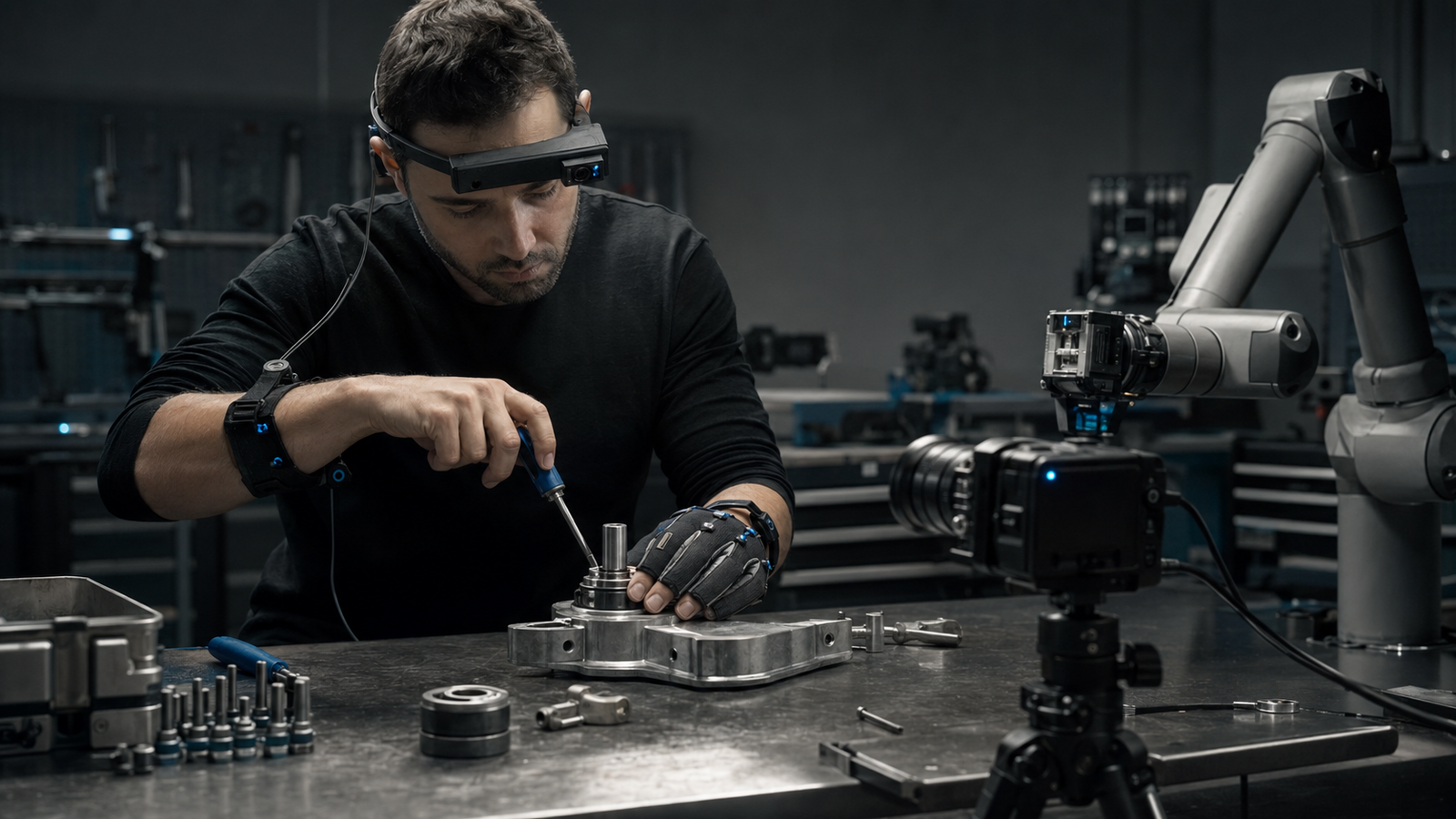
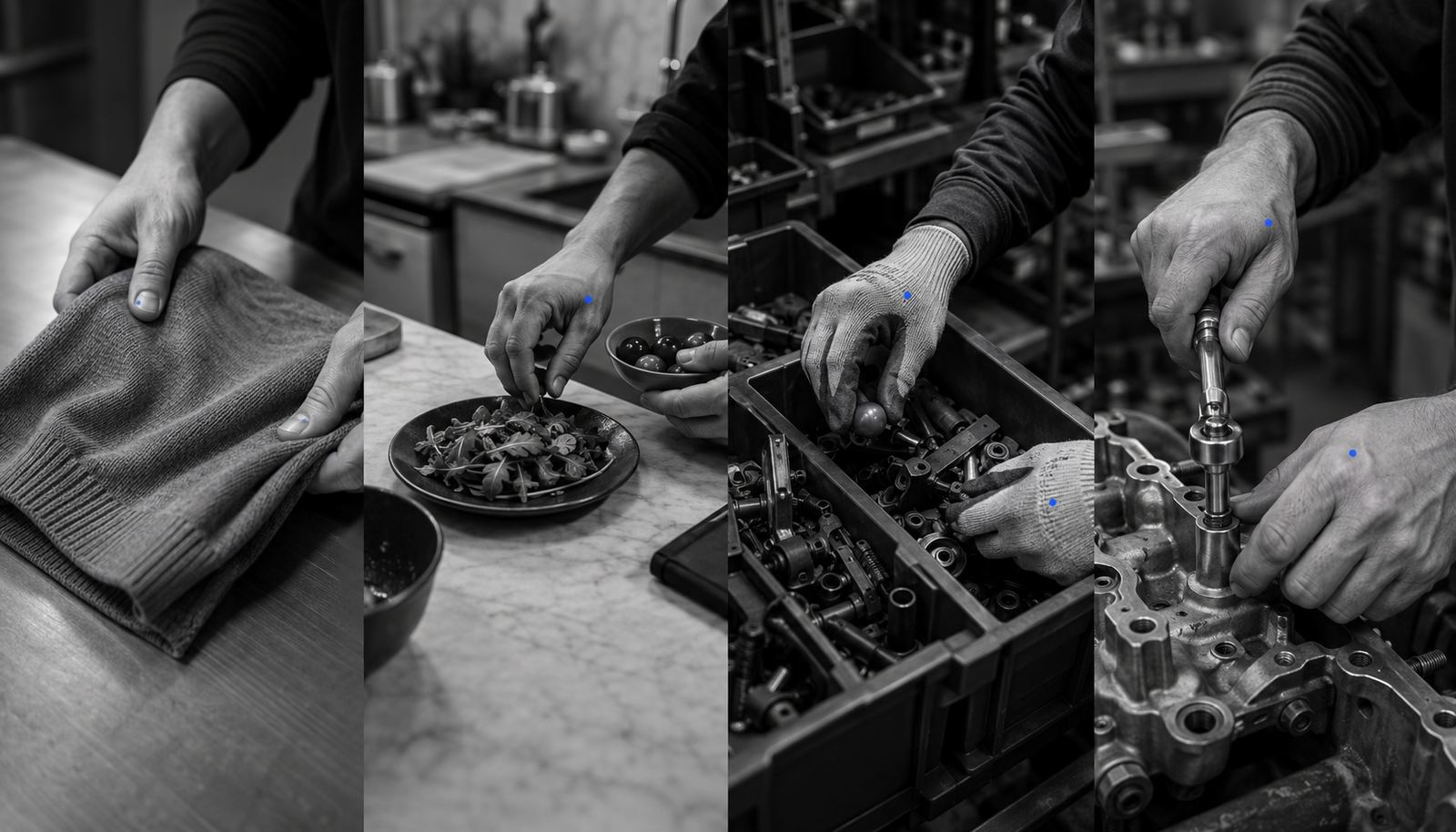
First-person human task demonstrations with visible hands, tools, objects, and outcomes.
↗ Cogmelt

Cogmelt turns robot capability gaps into targeted, rights-cleared multimodal demonstrations—then validates whether the resulting data improves performance.
Through the Cogmelt platform, contributors capture real human tasks across residential and commercial environments—from kitchens, homes, and everyday maintenance to retail, warehouses, workshops, and operational workspaces.
Each collection mission is designed around a specific robot failure or capability gap, capturing the actions, tools, variations, edge cases, and recovery behavior the robot is missing. The result is targeted human experience that helps physical-AI teams train against the gap, evaluate the result, and move robots closer to reliable real-world performance.
Robots fail in the long tail: unfamiliar objects, deformable materials, subtle contact, occlusion, imperfect tools, human variation, and recovery after mistakes.
Cogmelt turns those failures into a production specification—not another generic data dump.
Identify the missing experience behind the failure.
Define the task, environments, signals, variations, and success criteria.
Launch targeted real-world collection missions through Cogmelt.
Check quality, rights, safety, structure, and task completion.
Evaluate whether the resulting data improves robot performance.
Programs can begin with one capture type or combine synchronized signals around the same task, environment, action, and outcome.
First-person human task demonstrations with visible hands, tools, objects, and outcomes.
↗Synchronized first-person, third-person, spatial, and environment perspectives.
↗Force, pressure, contact, grasp-state, and manipulation signals.
↗Remote demonstrations, corrections, intervention, and operator intent.
↗Body, hand, object, tool, and camera trajectories aligned to task events.
↗Spoken intent, task narration, acoustic events, and language grounding.
↗Failure, recovery, success, robustness, and performance evidence.
↗Scene, object, workflow, equipment, and outcome metadata.
↗
Structured demonstrations organized around skills, variations, environments, and outcomes.
High-value episodes showing retries, corrections, intervention, and successful recovery.
Controlled evidence for benchmarking model behavior and comparing releases.
Buyer-defined collections with mission controls, validation, and delivery packaging.